Empathic Listening
  • Home
  • Types of Empathy
  • Empathic Listening Rationale
  • 5 levels of listening
  • Frame of reference
  • Barriers in Communication
  • EQUIP- Empathetic listening
  • Thinking Errors
  • Description of Problems
  • Stages of Moral Judgement
  • Lessons
  • Paraphrasing Skills
  • Reframing Closed Questions
  • References

PARAPHRASING SKILLS

EMPATHY SKILLS


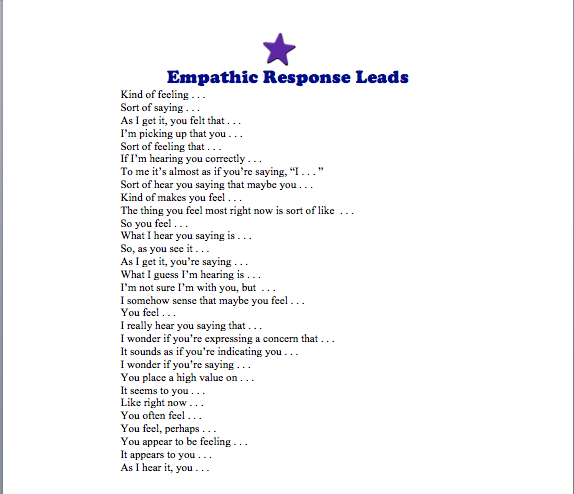
Paraphrasing: when we paraphrase what a person has told us we give a re-worded statement of the message content.

Why paraphrase? Paraphrasing helps the speaker feel they are being listened to and understood, and it helps the listener confirm their understanding is accurate.

When paraphrasing try to:

  • Listen for key thoughts, feelings, and statements of facts. 
  • Use your own words to let the other person know what you think they meant.
  • Be brief – you are trying to give a summary of key things said not a word for word account.
  • Avoid interpreting or jumping too far ahead of what the person has said.

Remember to: 
  •  Let the speaker correct you if you have misunderstood something
  • Avoid thinking of/constructing your own response while the person is talking
  • Clarify information if you are unsure

Picture


Basic Empathy: Basic empathy involves reflecting and validating a person’s feelings. When we use basic empathy we identify, acknowledge and normalize the feelings being expressed.

Why? Validating a person’s experience and feelings helps them to feel that their emotions aren’t wrong. It also facilitates your connection.

Examples:
  • You’re feeling really upset right now
  • I can see how this event made you angry
  • Being afraid in a situation like this is not uncommon
  • I’m not sure anyone can fully understand how much pain this incident has caused you

Powered by Create your own unique website with customizable templates.